
At dawn in many Nigerian cities, children weave through traffic selling sachet water, fruits, or phone accessories. In rural communities across Sub-Saharan Africa, others bend over farms, mines, or markets long before they ever see a classroom. This is not a marginal problem—it is a continental emergency.
Approximately 160 million worldwide are involved in child labour, which represents 1 in 10 children, according to the United Nations. Recent scholarship shows that child labour remains deeply entrenched in Nigeria and across Sub-Saharan Africa, despite decades of laws, policies, and international promises.
Nigeria alone accounts for an estimated 15 million child workers, making it one of the worst-affected countries in Africa. From street hawking in Lagos to hazardous farm work in rural communities, children as young as five are being pushed into labour that threatens their health, education, and future.
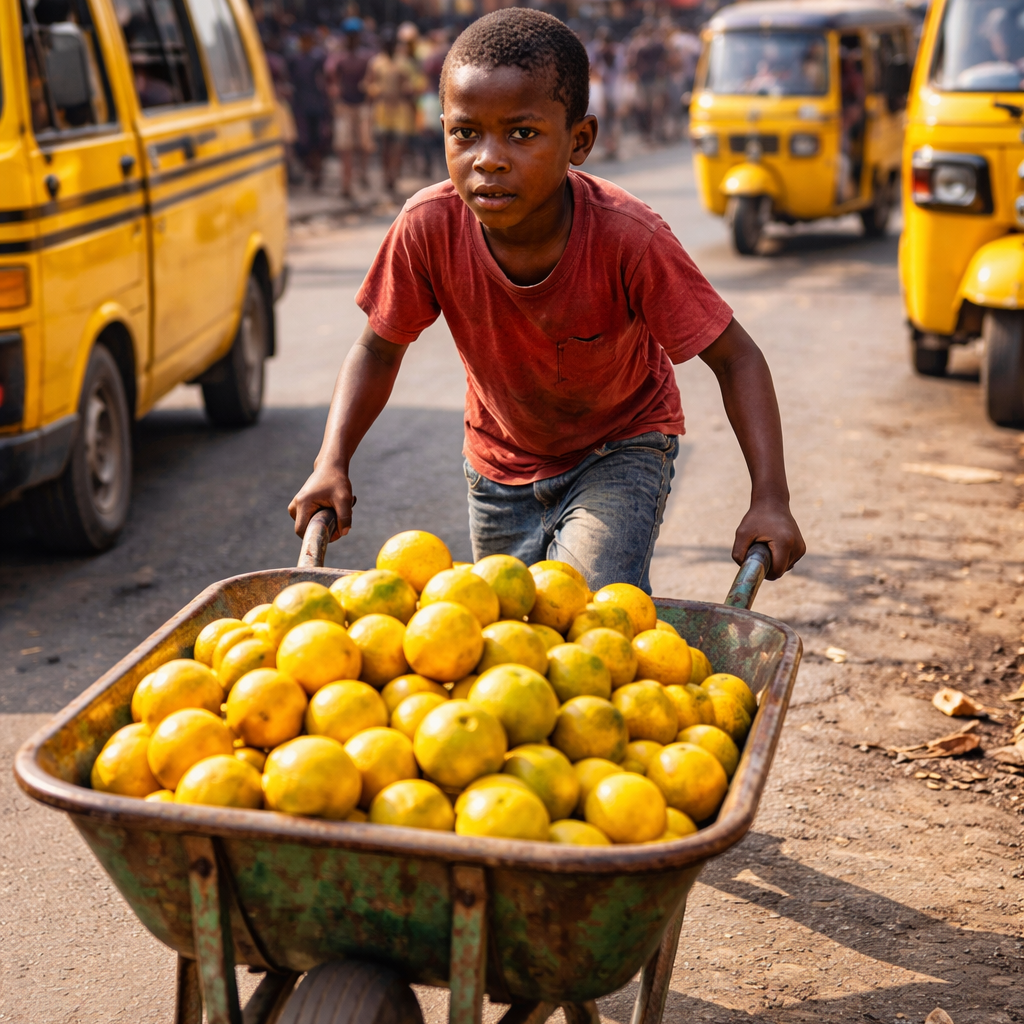
(Image: Library of Scholars)
Poverty, Policy Failure, and Broken Promises
The drivers of child labour are not mysterious. Poverty remains the most powerful force pushing families to depend on children’s earnings. When survival is at stake, school fees, uniforms, and books become luxuries rather than rights. However, poverty alone does not explain why child labour persists. Weak enforcement of child protection laws has created a dangerous gap between policy and practice. Nigeria’s Child Rights Act, passed in 2003, clearly prohibits exploitative and hazardous child labour. Yet implementation remains uneven across states, undermined by limited political will, corruption, and inadequate funding. In many communities, the law exists only on paper, while children continue to work in conditions that violate their basic rights.
When Culture and Crisis Collide
Across Sub-Saharan Africa, conflict, displacement, and economic shocks—from pandemics to climate-related disasters—have further worsened the situation. Each crisis pushes more children out of classrooms and into labour markets that were never meant for them.
Child labour in the region also wears many faces. Beyond street hawking and farm work, the problem includes child marriage, baby factories, and domestic servitude—forms of exploitation often hidden behind cultural norms or economic desperation. In northern Nigeria, child marriage remains widespread, pulling girls out of school and into early adulthood with lifelong consequences for their health and opportunities
Listening to Children, Not Just Speaking for Them
One of the most striking insights from a recent study is the call to move beyond top-down solutions. Ending child labour is not only about passing laws; it is about listening to children themselves. Frameworks such as the Lundy Model of Participation emphasize that children must have space to be heard, to contribute, and to influence decisions that shape their lives. Without their voices, policies risk missing the realities on the ground.
Children must have space to be heard, to contribute, and to influence decisions that shape their lives.
The Cost of Inaction
Every child forced to work instead of learn represents a future cut short. Child labour fuels cycles of poverty, limits national development, and normalizes inequality across generations. Nigeria and its neighbours are paying a high price—not just socially, but economically—for failing to protect their youngest citizens.
The message is clear: laws alone will not save children. Strong enforcement, real investment in education, economic support for families, and genuine inclusion of children’s voices are no longer optional. They are urgent necessities. Until these actions are taken, achieving Sustainable Development Goal (SDG) 4 will only remain a mirage.

Sunday Olawale Olaniran (PhD, MLIS) is a Senior Researcher in the College of Law, University of South Africa, South Africa. This piece draws on his recent journal article published in African Renaissance, titled Tackling Child Labour in Sub-Saharan Africa: Towards Strengthening the Child Rights Act and Policy in Nigeria
